For a child who moves to a new country, “home” can become a complicated word.
Is home the place you left behind, filled with familiar foods, family traditions and people you love? Or is it the new place where you go to school, make friends, celebrate new holidays and slowly begin to feel comfortable?
In Lourdes Fasani’s five-book collection Luli’s First Autumn, Luli’s First Thanksgiving, Luli’s Cafeteria Lunch, Luli’s Sad Farewell and Luli’s First Snowfall, the answer is beautifully simple: home can be both.
The emotional foundation of the collection is Luli’s Sad Farewell. Luli leaves Marianao, Cuba, with her mother and younger brother, saying goodbye to family members, treasured belongings and the world she knows. At the airport, she is forced to leave behind her favorite doll, while her mother must surrender family photographs. These moments show how painful leaving home can be, especially for a child who does not fully understand why everything is changing.
But Luli’s story does not end with loss. After traveling through Miami, she reaches Chicago and is finally reunited with her father after more than two years apart. That reunion becomes the beginning of a new kind of home.
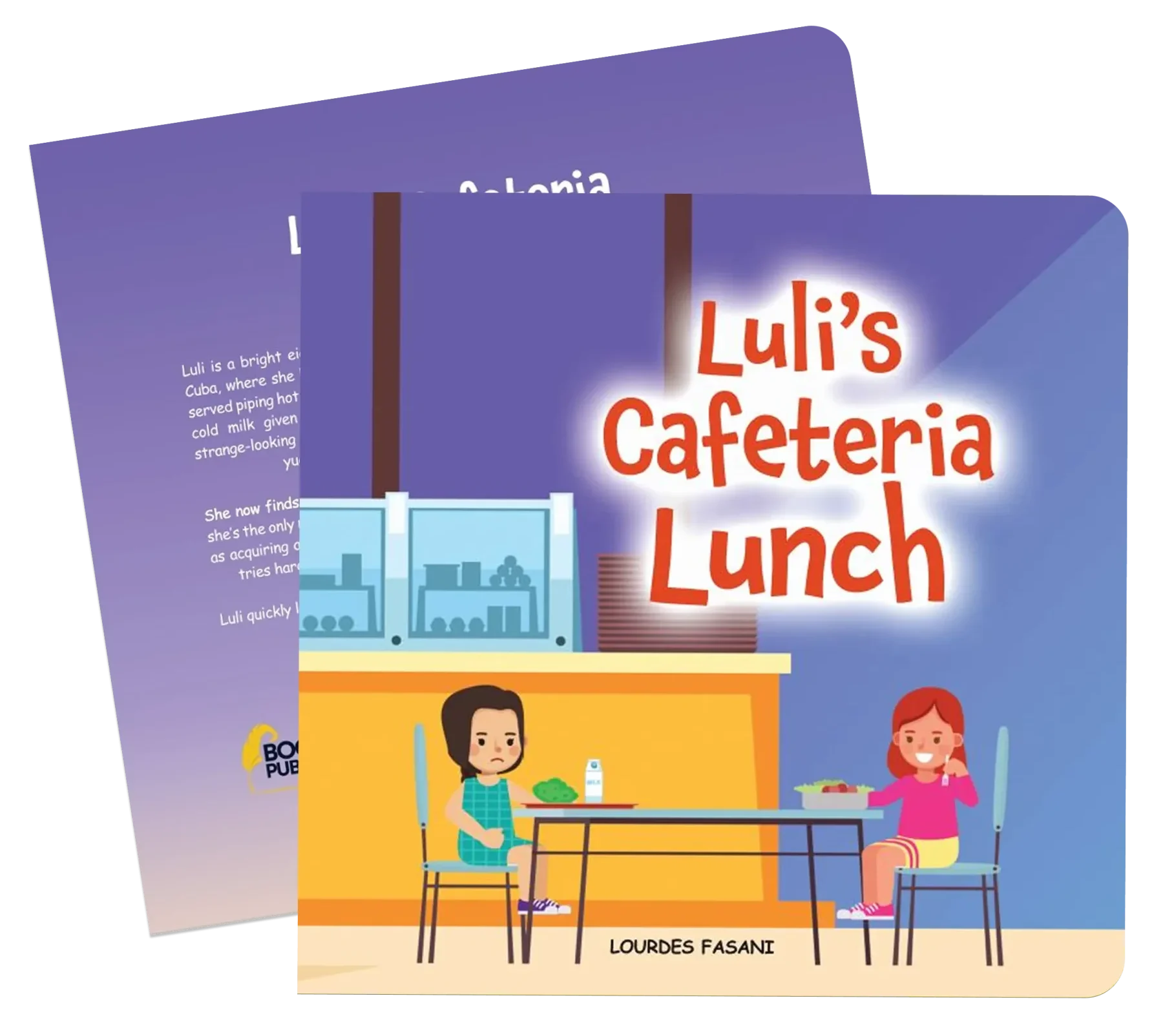
In Luli’s Cafeteria Lunch, readers see how difficult that new life can feel in small, everyday ways. Luli has never eaten in a school cafeteria. Cold milk seems strange because she is used to warm café con leche and broccoli is completely unfamiliar. Her mother helps her adjust by sending cocoa for the milk and garlic powder for the broccoli. Instead of forcing Luli to choose between old habits and new ones, the story shows her blending the two.
That same idea appears in Luli’s First Thanksgiving. Luli’s family celebrates with American neighbors, but their table includes more than turkey and pumpkin pie. Cuban dishes such as pork roast, congrí, yuca, plantains and flan become part of the meal too. The holiday becomes a symbol of belonging without losing cultural identity.
In Luli’s First Autumn, Luli discovers colorful leaves, pumpkins, Halloween and a school parade experience she had never known in Cuba. And in Luli’s First Snowfall, she wakes to a world so different that she thinks the snow-covered yard looks like it is covered in sugar. Yet even during Christmas in snowy Illinois, memories of Cuban food, family and traditions remain close to her heart.
That is the beautiful message running through Lourdes Fasani’s books.
Luli does not have to stop loving Cuba in order to embrace America. She does not have to forget old traditions to enjoy new ones. Her memories travel with her, even as she creates new memories in a different place.
For young readers, especially those who have moved, immigrated or grown up between cultures, that message can be deeply meaningful. Home does not always have to be one place on a map.
Sometimes, home is the place you remember and the place you are learning to love now.
Read the book on Amazon: https://www.amazon.com/stores/author/B0FVGJBMBR/allbooks