Imagine entering a classroom where everyone speaks a language you barely understand. The teacher smiles, classmates seem friendly, yet even the simplest conversations feel unfamiliar. For immigrant children, adapting to a new country involves more than learning words. It requires emotional security, cultural understanding, and the reassurance that they belong.
When eight-year-old Luli arrived in Hinsdale, Illinois, from Cuba in 1961, she faced a world that differed greatly from her childhood in Marianao. Following years of political uncertainty and separation from her father, her family hoped to build a better life. However, the transition brought challenges involving language, unfamiliar customs, and everyday routines.
Her experiences, portrayed in Luli’s Sad Farewell by Lourdes Fasani, illustrate how meaningful human connections can provide comfort during uncertain beginnings.
Kindness Creates a Sense of Belonging
For a child who cannot communicate confidently in a new language, welcoming gestures can make unfamiliar surroundings less intimidating.
On Luli’s first day of third grade, Mrs. Stevens introduced her to classmates who greeted her warmly. Although Luli could not respond in English, she smiled and waved.
Her teacher continued offering encouragement through thoughtful actions. During a Thanksgiving classroom activity, Mrs. Stevens helped Luli express her gratitude by writing down her words on a paper maple leaf.
These moments demonstrate that inclusion does not always require fluent communication. Patience, compassion, and a willingness to understand can help children participate before they have mastered a new language.
Family Support Bridges Two Cultures
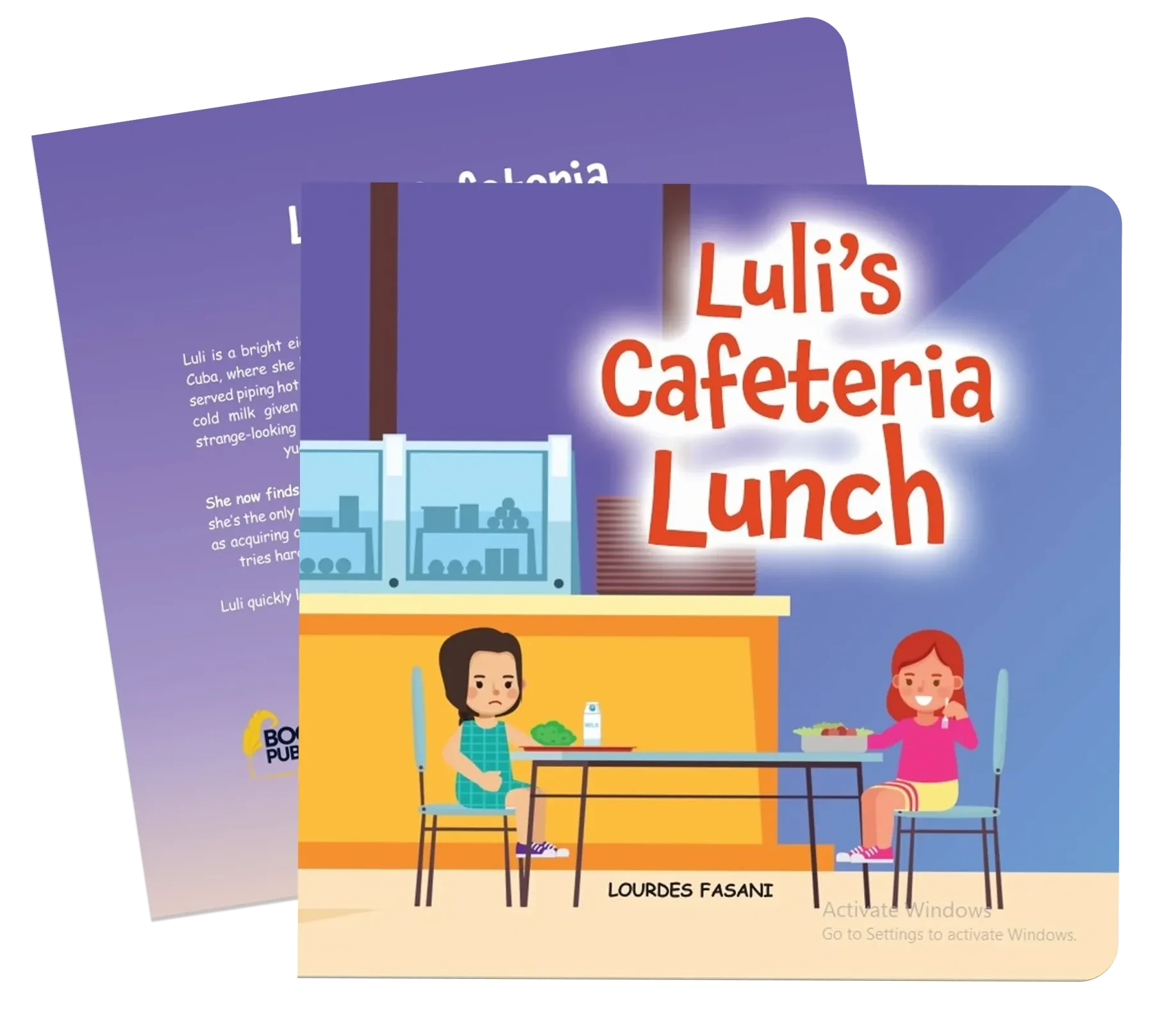
In Luli’s Cafeteria Lunch, Luli struggles with cold milk and steamed broccoli, foods unlike those she enjoyed in Cuba. Rather than dismissing her discomfort, her mother finds a creative solution: powdered cocoa for the milk and garlic powder for the broccoli.
This simple gesture allows Luli to enjoy lunch alongside her classmates without feeling that her familiar preferences must disappear.
Family support becomes especially meaningful when children discover that adapting does not require abandoning their roots.
Community Turns Unfamiliar Places Into Home
Beyond the classroom, supportive neighbors can help immigrant families participate more fully in community life.
In Luli’s First Autumn, Luli eagerly anticipates her school’s Halloween parade, but her family cannot easily afford costumes. Their neighbor Lisa offers to make costumes for Luli and her younger brother, Mayi, using her sewing machine and leftover fabric.
Similarly, in Luli’s First Thanksgiving, neighbors invite the family to celebrate an unfamiliar American holiday, creating an opportunity to share food, traditions, and gratitude.
These gestures reflect how kindness can transform cultural differences into opportunities for connection.
Belonging Begins With Understanding
For parents, educators, and communities, Luli’s experiences offer a valuable reminder: helping immigrant children adapt involves recognizing both their challenges and their cultural backgrounds.
A welcoming classroom, a parent’s creative solution, or a neighbor’s generosity may seem ordinary, but each can help a child feel accepted.
Learning a new language opens doors to communication. Kindness, family support, and community understanding help children feel confident enough to walk through them.
True belonging begins when children feel welcomed for who they are, not only for who they are learning to become.
Available On Amazon: https://www.amazon.com/stores/Lourdes-Fasani/author/B0FVGJBMBR
Visit the Author’s Official Website: https://lourdesfasanibooks.com/